Dimension stone is natural stone or rock that has been selected and finished to specific sizes or shapes, either trimmed, cut, drilled, ground, or other. The colour, texture and pattern, and surface finish of the stone are also normal requirements. Another important criteria of the stone is the durability of it making sure it endures and maintains strength, resistance to decay and appearance.
Quarries that produce dimension stone or crushed stone are interconvertible. Since most quarries can produce either one, a crushed stone quarry can be converted to dimension stone production. Dimension stone is separated by more precise and delicate techniques, such as diamond belt saws, burners (jet-piercers), or light and selective blasting with Primacord, a weak explosive.
Stone and rock types
A variety of igneous, metamorphic and sedimentary rocks are used as structural and decorative dimension stone. These are known as granite, limestone, marble, travertine, quartz-based stones (sandstone and quartzite) and slate. Special minor types are other varieties of dimension stone and these include alabaster (massive gypsum), soapstone (massive talc), serpentine and various products fashioned from natural stone.
Each type is covered by its own ASTM material specification, which sets out the requirements the stone must meet before it is accepted for use on a project. The table below summarises the main types.
| Stone type | Rock class | ASTM specification | Common applications |
| Granite | Igneous | ASTM C615 | Facade cladding, paving, kerbing, countertops, monuments |
| Limestone | Sedimentary | ASTM C568 | Facade cladding, interior stone, carved detail |
| Marble | Metamorphic | ASTM C503 | Facade cladding, interior floors and walls, tile |
| Travertine | Sedimentary | ASTM C1527 | Interior and exterior cladding, flooring |
| Sandstone and quartzite | Sedimentary and metamorphic | ASTM C616 | Facade cladding, paving, flagstone |
| Slate | Metamorphic | ASTM C629 | Roofing, flooring, countertops |
| Serpentine | Metamorphic | ASTM C1526 | Interior applications |
Alongside the material specifications, a series of ASTM test methods establish how the stone performs, including C97 (absorption and bulk specific gravity), C170 (compressive strength) and C880 (flexural strength). Our guide to ASTM standards for natural stone lists the full set.
There are a variety of finishes that can be applied to dimension stone to achieve diverse architectural and aesthetic effects.
- A polished finish – this gives the surface a high lustre and strong reflection of incident light (almost mirror-like)
- A honed finish – provides a smooth satin-like non-reflective surface
- A brush-hammered finish – similar to a houndstooth pattern, creates a rough, but uniformly patterned surface with impact tools varying in coarseness
- A sandblasted surface – provides an irregular pitted surface by impacting sand or metal particles at high velocity against a stone surface
- A thermal (or flamed) finish – produces a textured non-reflective surface with only a few reflections from cleavage faces, by applying a high-temperature flame. This finish may change the natural colour of the stone depending on mineralogical composition, particularly with stones containing higher levels of iron.
Applications
Overall Applications
Common colours are normally used in major applications, but there is an extraordinarily wide range of colours, available in thousands of patterns. These patterns are created by geological phenomena such as mineral grains, inclusions, veins, cavity fillings, blebs and streaks.
Stone countertops such as granite are usually polished but sometimes with another finish like honed or sandblasted. The slabs are cut to fit the top of the kitchen or bathroom cabinet, by measuring, templating or digital templating. Countertop slabs are commonly sawn from rough blocks of stone by reciprocating gangsaw using steel shot as abrasive. Modern technology sees diamond wire saws being used using less water and energy. Multi-wire saws with as many as 60 wires can slab a block in less than two hours. The slabs are then finished and sealed with resin to fill micro-fissures and surface imperfections typically due to the loss of poorly bonded elements such as biotite.
Tile is a thin modular stone unit that’s commonly 12 inch square and 3/8 inch deep, with other popular sizes being 15 inch square, 18 inch square and 24 inch square, usually a little deeper than 12 inches. The majority of tile has a polished finish, though other finishes such as honed are becoming more common. Almost all stone tile is mass-produced by automated tile lines to identical size, finish and close tolerances. The exceptions include a slate flooring tile and special orders: odd shapes and sizes, unusual finishes or inlay work. The stone for tile is mostly marble but often granite and sometimes limestone, slate or a quartz-based stone. Common colours are white and light earth colours, with them being mainly produced in Italy and China.
Stone monuments include tombstone, grave markers or as mausoleums. After being gangsawed into big deep wide slabs, smaller saws or guillotines will break the granite and shape the monuments. The fronts and backs are usually polished. The individual monuments are then carved, shaped and further defined by hand tools and sandblasting equipment. Granite and quartz both demonstrate good durability. Limestone and sandstone were commonly chosen for monuments in the 19th century. The most common monument colours for granite are grey, black and mahogany; for marble, white is most popular.
Facades, Flooring and related Applications
For building and traffic-related uses, there are a number of smaller applications. Building components include stone used as a veneer, a non-load-bearing facing stone attached to a backing of an ornamental nature. Roofing slate is a thin-split shingle-sized piece of slate; slate is also used as countertops and flooring tiles. A traffic-related stone is used for curbing. This thin stone is used along streets or highways to maintain the integrity of sidewalks and borders. Flagstone is a shallow naturally irregular-edge slab of stone which is sometimes sawed into a rectangular shape, used as paving. For curbing the stone is almost always granite and for flagstone, the stone is almost always a quartz-based stone.
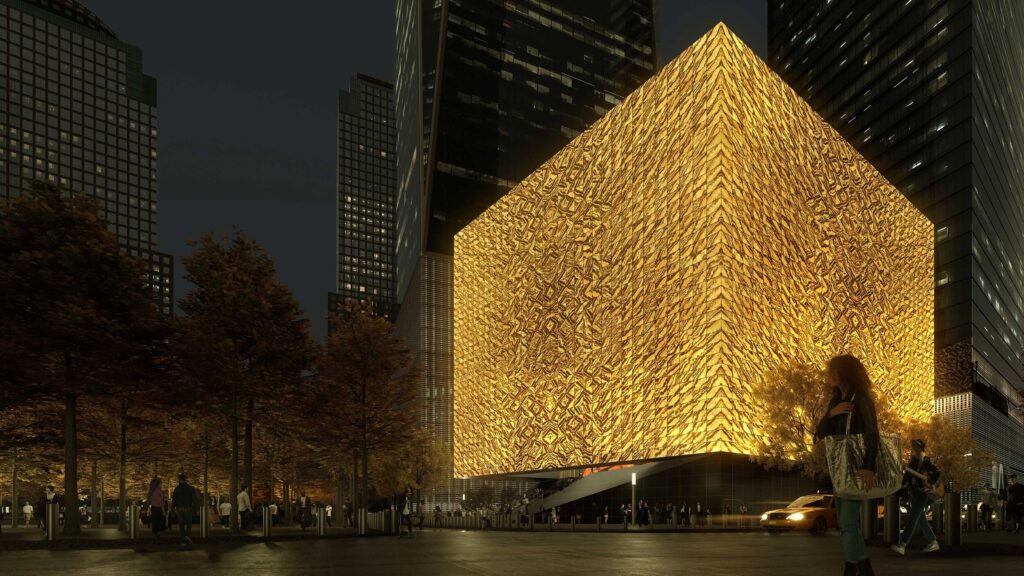
Façade cladding is the most common application for dimension stone that we at Ramsey Stone Consultants assist our clients with. These large pieces have to be carefully selected and inspected to ensure they are safe to fix to a surface with no possibility of falling from often very great heights. They often have to be selected from the quarry megablocks specifically to the architect’s design and in the case of the Perelman Performing Arts Center (PAC) – New York, NY there is no truer example of the need for the natural design to be matched perfectly around the entire facade.
Production
The major producers of dimension stone include Brazil, China, India, Italy and Spain and each has annual production levels of nine to over twenty-two million tons. Portugal produces 3 million tons of dimension stone each year.
Sustainability
Dimension stone is one of the most sustainable of the industrial minerals since it is created by separating it from the natural bedrock underlying all land on every continent. Dimension stone rates very well in terms of the criteria on the ASTM checklist for the sustainability of building products: there are no toxic materials used in its processing, there are no direct greenhouse gas emissions during processing, the dust created is controlled, the water used is almost completely recycled and it is a perpetual resource. Dimension stone can last many generations, even centuries. The colour and pattern of the stone can also be changed by proximity to an igneous rock body or by the presence of circulating groundwater charged with carbon dioxide.
Recycling and reuse of Dimension Stone
Recycling dimension stone can occur when structures are demolished, along with recycling timber and construction aggregate in the form of concrete. Not many structures incorporate dimension stones, and even fewer of them have dimension stone worth saving.
Recycled dimension stone is used in old stone buildings that are being renovated – replacing deteriorated stone pieces, in fireplace mantels, benches, veneer or landscaping (walls).
Dimension stone is also reused. Buildings, stone walls, arches, stairways and balustrades alongside a boulevard can also be renovated and reused.
Selecting the colour
Selecting the colour depends on how it will match the surroundings. There are so many different stones with different colour and patterns with each stone changing radically in colour and appearance. A polished finish can accentuate the colour and make any of the patterns more vivid, and the rougher finishes lighten the colour and make the patterns more subdued.
Cleaning the stone
Dimension stone requires some specialised methods of cleaning and maintenance. Abrasive cleaners should not be used on a polished surface because it will wear off. Acidic cleaners can not be used on marble or limestone because it will remove the finish. Textured finishes can be treated with some mildly abrasive cleaners but not bleach or an acidic cleaner.
Further Reading…
Read about Ventilated Stone Facades, their benefits and how they work.
Read our article on Using Natural Stone in Buildings and Architecture.